








How MoveTogether runs on one wearable data layer.
A social fitness app where members compete in leagues and group challenges, with an AI coach that reads real activity. Every device a member owns had to work, and the team behind it is small.

- Brands connected
- 6
- Integration to maintain
- 1
- Per-vendor OAuth flows built
- 0
- Sync modes: on demand + scheduled
- 2
The problem
Every brand is its own integration.
A competition only works if everyone's steps count the same way, whatever device each member already wears.


A separate integration per brand
Done natively, every brand is its own OAuth flow, data model and set of quirks, each one changing on its own schedule.
A standing commitment for a small team
Every provider added is another thing that can break in a release you did not ship, and the maintenance does not scale down with the team.
The solution
One layer, all of it.
Open Wearables is MoveTogether's entire third-party wearable layer. Rather than integrating each brand, they integrated once and the platform handles what sits underneath.
Open Wearables manages the OAuth handshakes and token storage for every connected brand, so none of that lives in MoveTogether's codebase.
Daily activity and sleep summaries arrive identically whatever produced them, which is what makes a leaderboard fair across devices.
On demand when a member opens the app, scheduled the rest of the time.
Self-hosted, so the activity history behind every competition stays in infrastructure they control.



In their words
“Open Wearables is our entire third-party wearable layer. We connect Fitbit, Garmin, WHOOP, Oura, Strava, and Polar through a single integration, no per-vendor OAuth to maintain, one normalized data shape feeding our whole competition and coaching engine. It let a small team ship a broad device lineup and keep it current.”
The data
What arrives in one shape.
Everything the competition engine and the AI coach read comes through the same schema, whatever device produced it.


Open Wearables · one schema
- steps
- active_calories
- exercise_minutes
- workouts
- sleep
Six brands server to server, plus Apple Health on the device through HealthKit.
- StepsCompetitions and leaderboards.
- Active caloriesChallenge scoring.
- Exercise minutesStreaks and goals.
- WorkoutsActivity history and coaching context.
- SleepRecovery context for the AI coach.
In the app
What members see.
Every screen runs on the same normalised data, whichever device a member wears.
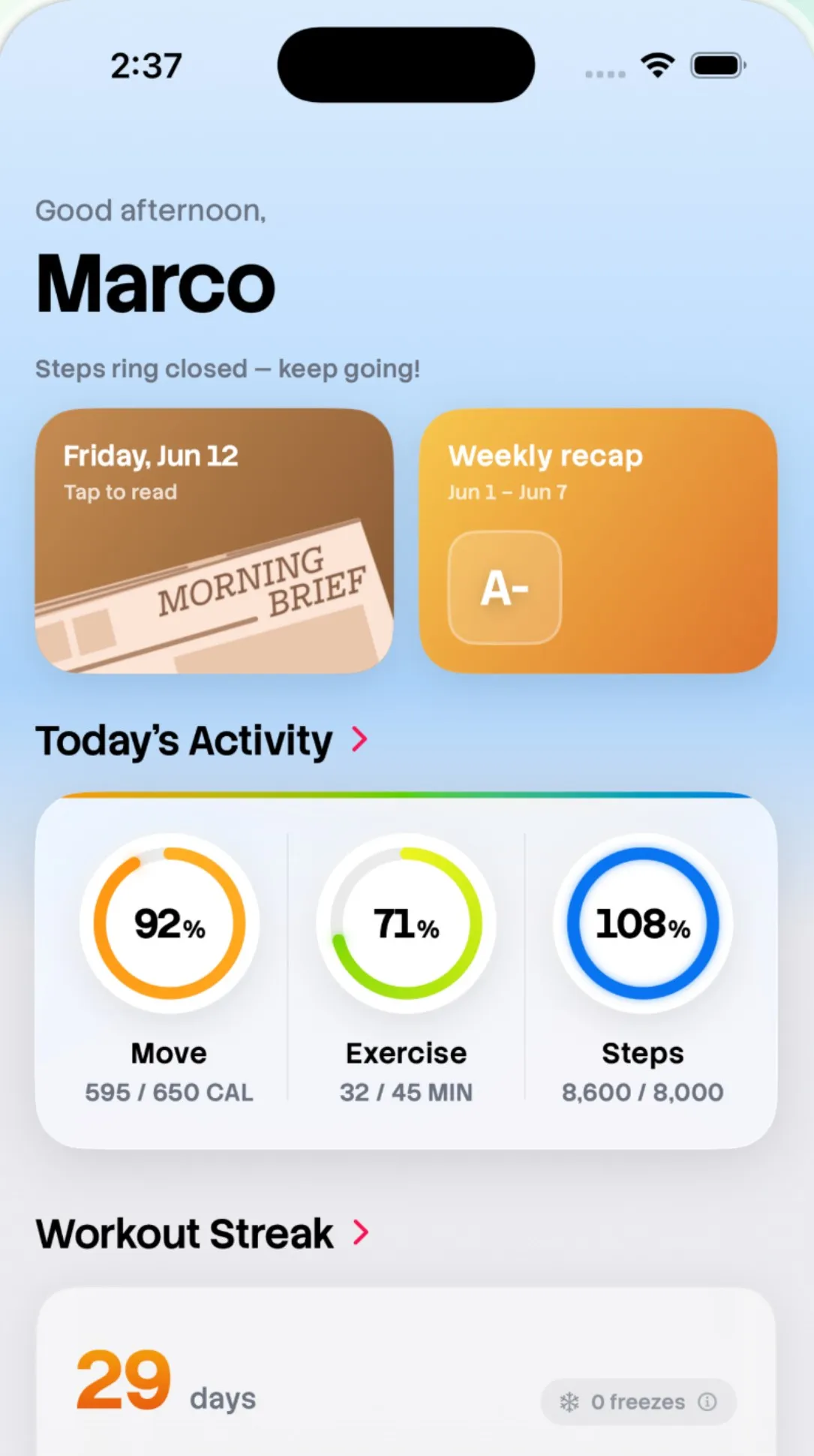
Today's activity
Move, exercise and steps rings, closed from whatever a member's watch or ring recorded.

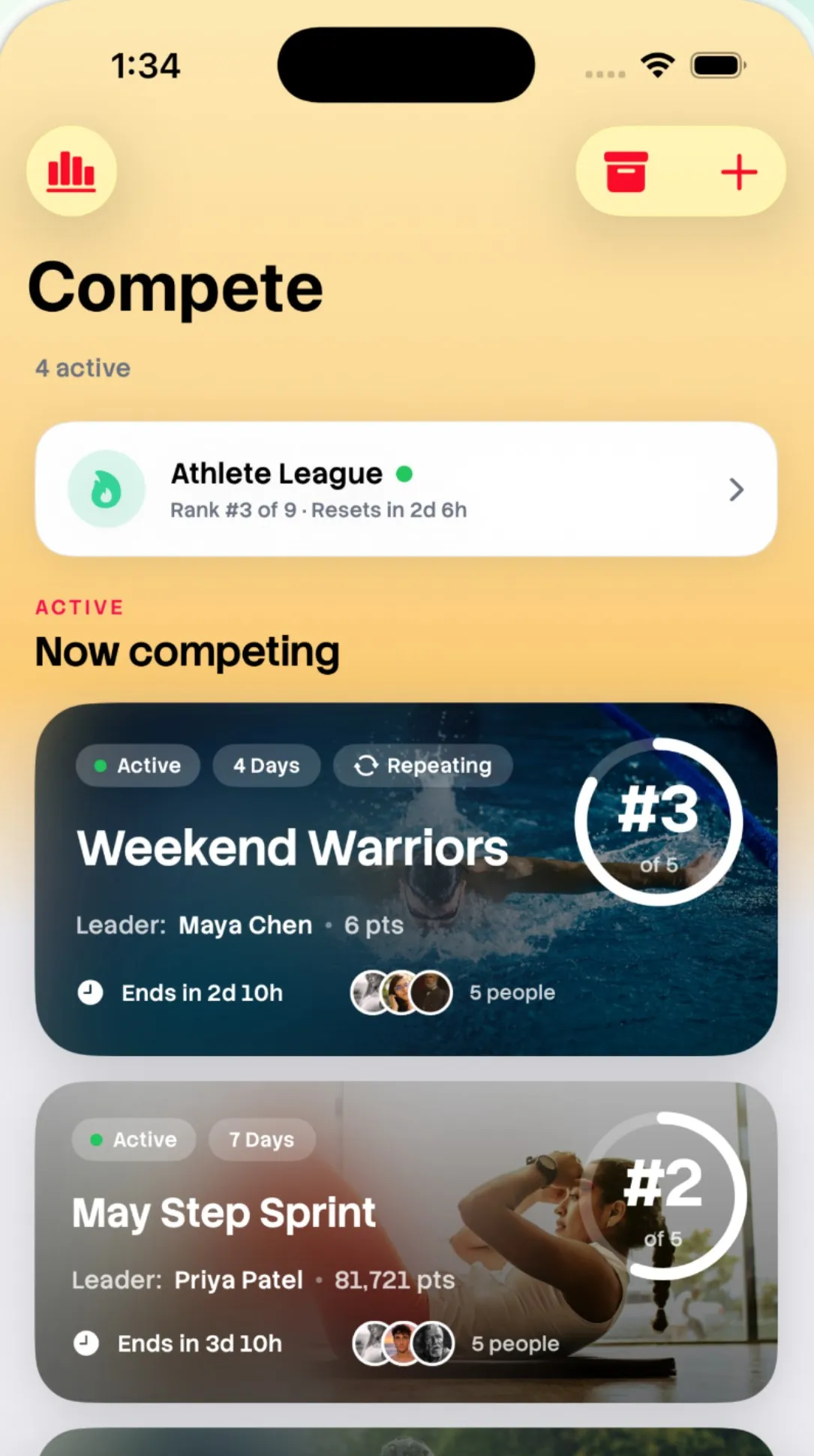
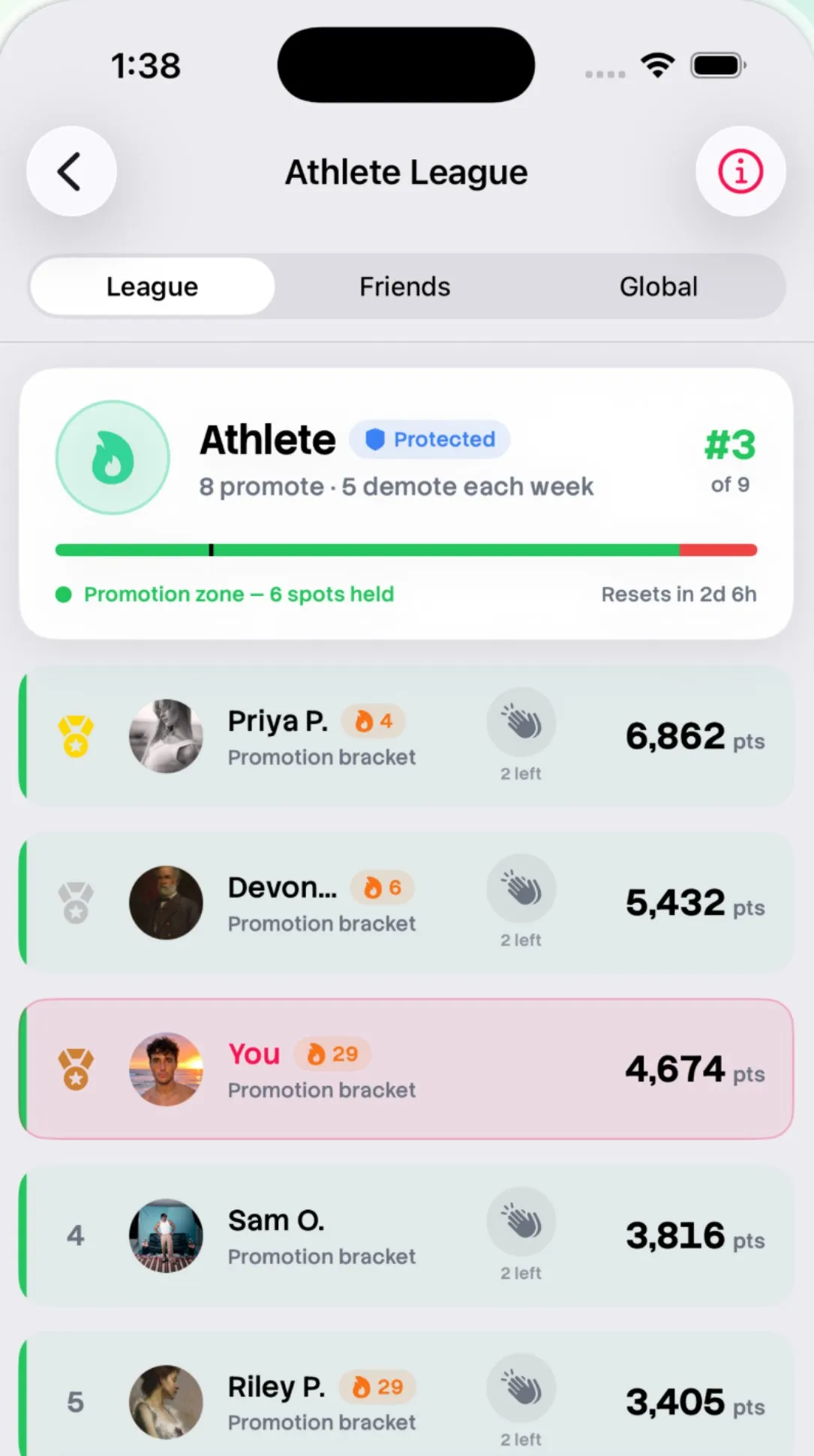
Competitions
Weekly challenges between friends, scored the same way for every brand in the group.

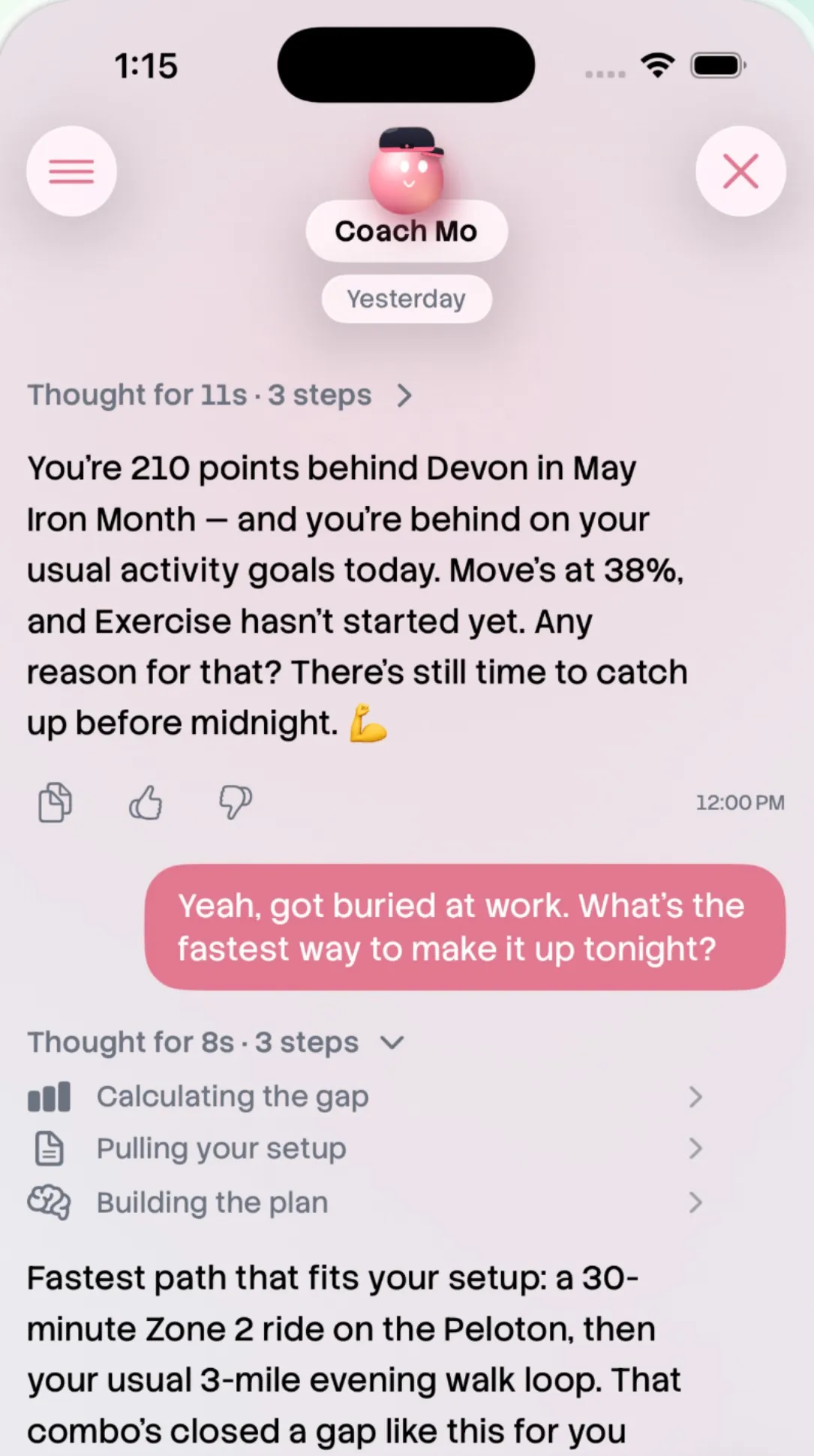
AI coach
Mo reads a member's real activity and sleep, then plans the fastest way to close today's gap.

The result
A broad device lineup, kept current by a small team.
MoveTogether shipped support for six brands without building a single per-vendor OAuth flow. Every connected device feeds the same normalised schema, so competition scoring, leaderboards, streaks and the AI coach treat them equally, with no device-specific branches in the product logic.
The part that matters for a small team is what happens after launch.
Provider changes land in the open-source core rather than in their sprint, which is why a broad lineup stayed maintainable rather than becoming the thing the team works on.
Support every device your users own.
MoveTogether started from the public repository and shipped it with their own team. Clone it and run it in your own infrastructure, or see what it costs to have us stand it up inside your account.
FAQ
Questions this raises.
What happens when one of those providers changes their API?
The fix lands in the open-source core rather than in their sprint. That is the part that makes a broad device lineup survivable for a small team: the maintenance is shared across everyone running the project, instead of being six separate things each team tracks alone.
Can a brand be added later, or is the lineup fixed at launch?
Added later, and it does not change the application code. Because every source arrives in the same schema, the competition scoring and the coaching engine do not know which device produced a reading. A new brand is a connection, not a feature.
Does a small team need you to keep this running?
Not for this shape of deployment. MoveTogether runs it themselves, and ongoing maintenance from us is a decision a team can take later rather than a dependency they start with. What we sell is the work of standing it up or keeping it current, never access to the software.